Blog
Back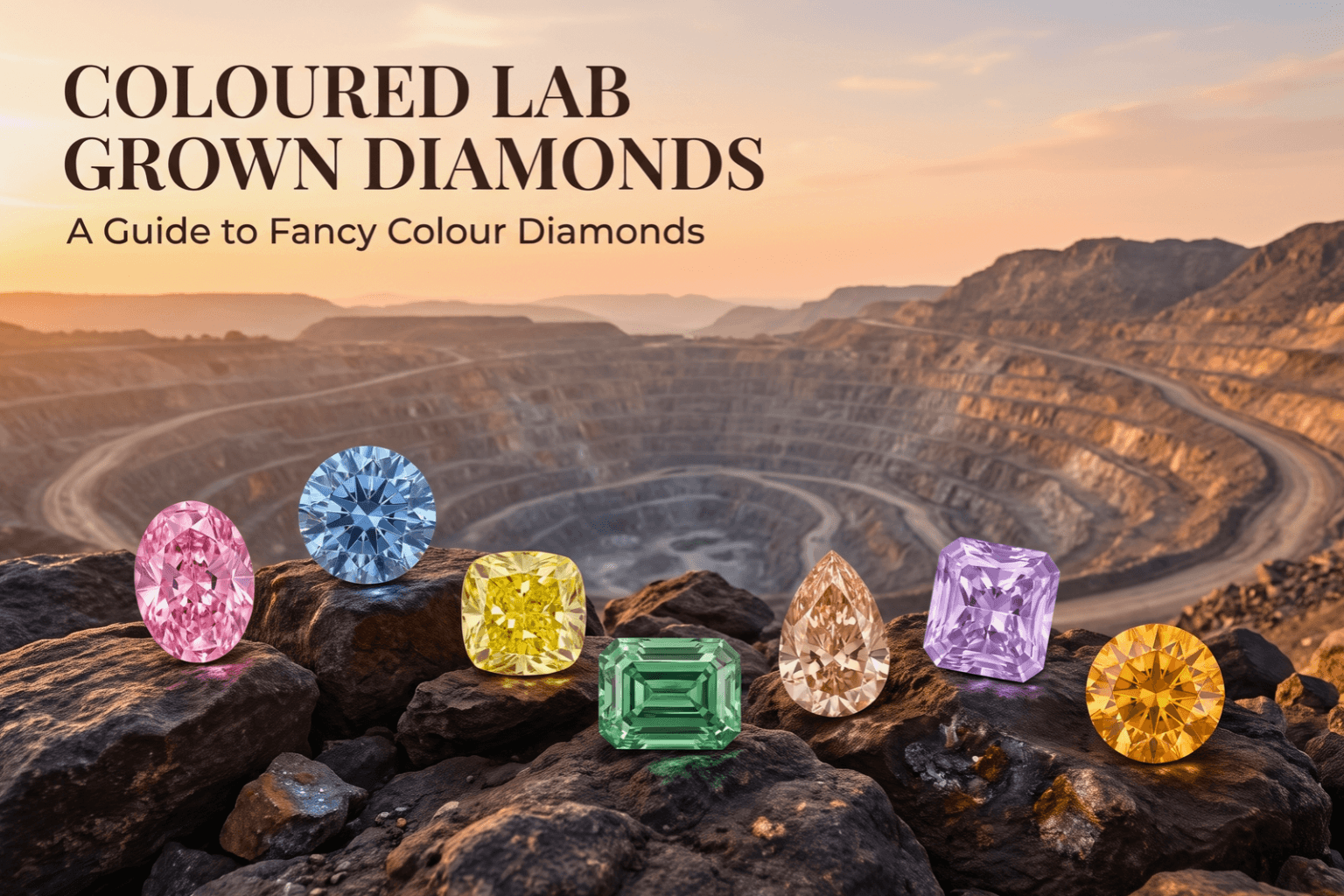
Coloured Lab Grown Diamonds: A Guide to Fancy Colour Diamonds
Diamonds do not have to be colourless to create impact. Pink, blue, yellow, green and other shades can change
the entire character of a jewellery piece, making colour part of the design rather than just a grading detail.
Coloured lab grown diamonds give designers and buyers access to a wider visual palette, with colour becoming a deliberate feature of the stone. From softer tones to more vivid shades, the right choice can influence how modern, bold, elegant or distinctive a finished piece feels.
This guide looks at the different colour options available, how those colours are judged, why two stones in a similar shade can still look different and how to choose a colour that works with a specific jewellery design. We will also cover the practical points buyers should consider when exploring fancy coloured diamonds in the lab-grown category.
What Are Coloured Lab Grown Diamonds?
Coloured lab grown diamonds are valued for visible shades such as pink, blue, yellow and green, where colour becomes a key part of the stone’s appearance.
With lab grown coloured diamonds, softer tones can create a refined look, while stronger shades can become the main focus of a design.Often grouped within the fancy colour category, these diamonds are chosen for the shade itself, its intensity, balance and how well it suits the intended jewellery style.
What Colours Can Lab Grown Diamonds Have?
Lab-grown diamonds can offer a much wider colour palette than many buyers expect. Alongside classic fancy shades, they are also available in more specific tone variations that can completely change the mood of a jewellery design. Some colours feel soft and delicate, while others create a bolder, more striking visual effect.
Pink and Rose Tones
Pink shades can range from Vivid Rose Pink and Intense Rose Pink to softer options such as Bubble Gum Pink, Baby Pink and Blush Pink. These tones can suit everything from feminine, delicate pieces to stronger colour-led designs.
Yellow and Golden Tones
Yellow diamonds are available in shades such as Golden Yellow, Canary Yellow, Amber Yellow, Sunlight Yellow and Butter Yellow. Some feel bright and lively, while others bring a warmer, richer appearance to the jewellery.
Blue Tones
Blue shades can create a cooler and more contemporary look. Options such as Royal Blue, Ocean Blue, Sky Blue and Ice Blue each offer a different level of depth and intensity.
Brown and Champagne Tones
For buyers looking for warmer earthy shades, there are tones such as Desert Brown, Chocolate Brown, Champagne Brown, Cognac Brown and Toffee Cream Brown. These colours can add a more unusual and sophisticated character to a design.
Green Tones
Green diamonds can appear in shades such as Forest Green, Rich Green, Emerald Green and Pale Green, offering a distinctive alternative to more traditional colour choices.
Red, Orange, Purple and Other Distinctive Colours
More expressive options can include Garnet Red, Reddish Orange, Purple, Black and other unique colour variations. These shades are often chosen when the design calls for something more unusual, dramatic or visually memorable.
What matters most is not simply the colour name, but how the specific shade works with the metal, setting and overall jewellery concept.
What Makes One Coloured Diamond Look Different From Another?
Two diamonds can share the same colour name and still look noticeably different. Key factors include:
- Hue: The main colour family, such as pink, yellow or blue.
- Saturation: How strong or vivid the colour appears.
- Tone: Whether the shade looks lighter, medium or deeper.
- Colour distribution: How evenly the colour appears across the stone.
- Lighting: Daylight, warm indoor light and showroom lighting can change how a shade is perceived.
When buyers ask for the best colour for lab grown diamond jewellery, there is no single answer. The better question is: what is the best color for a lab grown diamond in this particular design?
The right choice depends on the metal, setting, intended look and personal preference.
How Is Colour Evaluated in a Lab Grown Diamond?
Colour is judged by looking at the stone’s actual appearance, including the strength of the shade, how evenly it is distributed and the overall visual balance. Lighter tones can feel softer, while stronger shades may create a richer, more dramatic effect.
Viewing conditions also matter, as daylight, warm indoor light and showroom lighting can change how a colour is perceived. Buyers should therefore look beyond labels such as pink, yellow or blue and consider how the diamond’s colour works with the intended metal, setting and design.
Can Lab Grown Diamonds Be Coloured?
Yes, lab-grown diamonds can display a wide range of colour characteristics. For anyone asking can lab grown diamonds be colored, the short answer is that colour can form as part of the diamond’s development and may also be influenced by treatment after growth.
The result can range from subtle tones to much stronger, more noticeable shades. What matters from a buyer’s perspective is how that colour appears in the finished stone, rather than assuming every diamond within the same colour family will look identical.
Different production and treatment approaches can influence the final appearance, but the technical details vary depending on the stone and process used.
For a deeper explanation of different lab grown diamond growth methods, see our guide to CVD vs HPHT Diamonds.
How to Choose a Coloured Lab Grown Diamond for Jewellery
Choosing colour for jewellery is less about finding a universal “best” option and more about deciding how the stone should work within the finished design.
Consider the Jewellery Design
Start with the role of the diamond. A centre stone can carry a stronger, more distinctive colour, while accent stones may need to support the design without overpowering it. Multi-colour pieces introduce another layer, where contrast and coordination become part of the visual plan.
Consider the Metal
Metal choice can change how a colour is perceived. White metals can create a cooler, cleaner contrast, yellow gold can add warmth, and rose-toned metals can complement softer pink or blush shades.
Consider the Overall Colour Balance
For multi-stone jewellery, look at consistency, contrast and pairing. Similar shades can create harmony, while deliberate differences can make the design feel more expressive. The key is making sure the overall combination looks intentional.
Consider the Intended Customer
A bold statement piece may suit a vivid colour, while an everyday design may benefit from something softer and easier to wear. For jewellers, designers and trade buyers, the right choice should support both the design concept and the customer it is intended for.
Coloured Lab Grown Diamonds for Jewellery Designers and Retailers
For jewellery businesses, colour opens up creative directions that standard colourless stones cannot always provide. It can introduce a new centre-stone option, add contrast through accent combinations or become the foundation of an entire colour-led collection.
For designers, this creates more flexibility when developing bespoke pieces or building collections around a particular mood, palette or customer preference. Retailers can also use coloured stones to offer alternatives that feel more distinctive without changing the overall jewellery category.
From a trade perspective, the practical side matters just as much as the visual one. Buyers may need to consider how closely stones match, which shapes and sizes are available, and whether similar colours can be sourced again for repeat designs or future orders.
For businesses exploring a wider range of options, certified coloured lab grown diamonds can provide a useful route into more varied, design-led sourcing.
What Should Buyers Look For When Choosing Coloured Lab Grown Diamonds?
Choosing a coloured stone is mainly about how the colour will work within the finished piece. Before selecting one, buyers should consider:
- the colour family they want to achieve
- how light, deep or vivid the shade appears
- tone and saturation across the stone
- whether the colour looks even and balanced
- the jewellery style the diamond will be used in
- how the shade interacts with white, yellow or rose metal
- whether the chosen shape enhances the colour visually
- the size needed to create the right level of presence
- whether matching stones are required for pairs or multi-stone designs
- whether similar specifications may be needed again for repeat production
For jewellers and trade buyers, these checks help keep the choice focused on the visual result rather than the colour name alone.
Final Thoughts
Colour gives lab-grown diamonds another design dimension beyond the traditional colourless look. From soft pinks and warm yellows to cooler blue and green tones, each shade can change the mood, balance and personality of a finished piece.
There is no single “best” colour. The right choice depends on the design, the visual effect you want to create and how the stone works with the metal, setting and surrounding diamonds.
For buyers exploring more distinctive jewellery options, colour can open up a much broader range of creative possibilities.
Explore Certified Coloured Lab Grown Diamonds
FAQs
What are coloured lab grown diamonds?
They are laboratory-grown diamonds where colour is a noticeable part of the stone’s appearance. Shades can range from soft pastels to stronger, more vivid tones, depending on the individual diamond.
What is the best colour for a lab grown diamond?
There is no single best colour. The right choice depends on the jewellery design, metal, setting, desired visual effect and the preference of the person who will wear it.
Can lab grown diamonds be coloured?
Yes. Lab-grown diamonds can display a variety of colours, including pink, yellow, blue and green tones. Colour may develop during growth or be influenced by treatment, depending on the stone.
Do lab grown diamonds change colour over time?
Under normal wear, lab-grown diamonds are not expected to permanently change colour. Some stones may show temporary colour shifts after UV or high-heat exposure, but these changes are generally reversible.
Are coloured lab grown diamonds real diamonds?
Yes. Coloured lab-grown diamonds are diamonds grown in a laboratory environment. Their colour changes their visual appearance, but they remain diamond material rather than a coloured imitation or substitute.