Blog
Back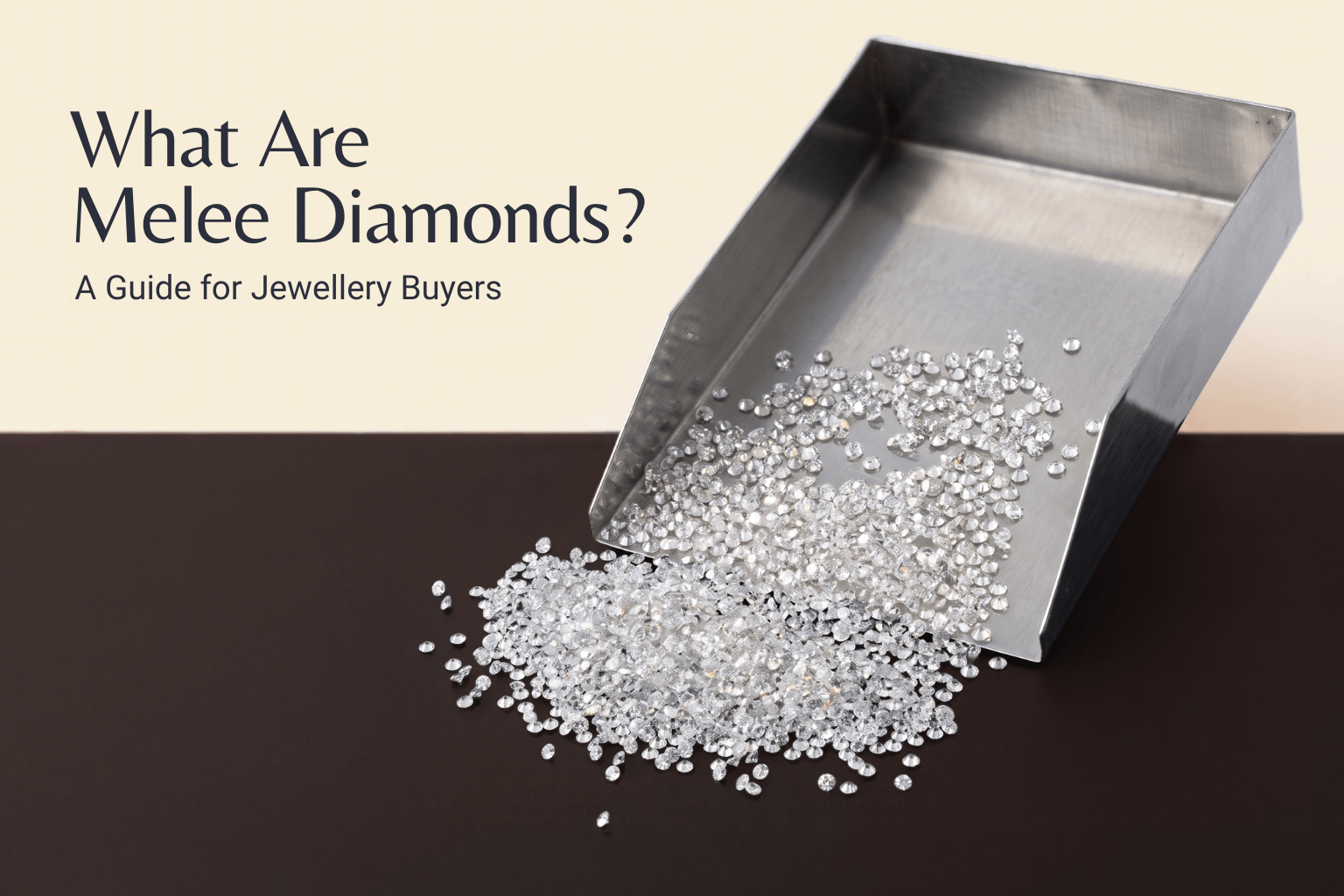
What Are Melee Diamonds? A Guide for Jewellery Buyers
If you have ever looked closely at pavé, halo, tennis or multi-stone jewellery, you have probably seen melee diamonds without realising it. These smaller stones are used to add detail, brilliance and visual continuity around a larger design, but their role goes far beyond decoration.
Understanding what are melee diamonds means looking at how they are sized, matched and selected for specific jewellery applications. For buyers, consistency matters just as much as the individual stone, especially when several diamonds need to sit together in one piece.
In this guide, we’ll explain how they are used, what influences their appearance and price, how lab-grown options compare and what jewellery buyers should check before sourcing them.
What Are Melee Diamonds?
Smaller accent diamonds bring texture, brightness and visual harmony to a jewellery design. Instead of acting as the main centre stone, they are usually set in groups across pavé, halo, tennis, eternity and other multi-stone styles.
Because several stones often sit side by side, close matching matters. Diameter, colour, clarity and overall appearance should work together so the finished piece looks even, refined and visually consistent.
How Are Melee Diamonds Used in Jewellery?
They are especially useful when a design needs continuous detail rather than one dominant stone. Their smaller size allows jewellers to build light, texture and definition into different parts of a piece without changing the overall balance.
In pavé settings, they are set closely together to create a surface of fine sparkle. Halo designs use them around a centre stone to add presence and frame the main diamond. In tennis jewellery, they are arranged in a continuous line, which makes consistency in size and appearance particularly important.
You will also find them in eternity bands, where stones are placed around part or all of the ring, as well as in multi-stone designs that rely on several diamonds working together. As accent stones, they can highlight shoulders, borders or smaller design details without taking attention away from the central feature.
What Sizes Are Melee Diamonds Available In?
- Point Size
Smaller diamonds are often described by point size, which gives buyers a practical way to compare stones within a narrow weight range. - Millimetre Measurements
Diameter is equally important, especially when several stones need to sit closely together in the same setting. - Setting Consistency
In pavé, halo, tennis and eternity designs, even slight size differences can affect spacing, alignment and the overall finish. - Visual Effect
Finer sizes create a more delicate, continuous look, while slightly larger stones can make the setting feel more defined. - Best Buying Approach
Compare both point size and actual measurements rather than relying on weight alone, particularly when multiple stones need to match closely.
How Are Melee Diamonds Selected and Matched?
When several stones are going into the same piece, matching becomes just as important as the individual quality of each diamond. Buyers usually look for close consistency in colour, clarity, diameter, shape and overall visual appearance so the finished jewellery feels balanced rather than uneven.
For designs such as tennis bracelets, eternity bands, pavé or multi-stone settings, even small differences can become noticeable once the diamonds are placed side by side. That is why stones are often compared as a group, not one at a time.
Consistent batches are especially useful for repeat production or larger jewellery runs because they reduce variation across multiple pieces. If you are sourcing for a specific setting, it helps to work from the required measurements and visual standard first, then select stones that sit comfortably within that brief.
For current size options and matched requirements, buyers can also explore our Melee & Pointers range.
Lab Grown Melee Diamonds vs Other Melee Diamonds
|
Factor |
Lab Grown Melee Diamonds |
Other Melee Diamonds |
|
Origin |
Produced in a controlled laboratory environment. |
Sourced from mined diamonds. |
|
Jewellery Use |
Used in pavé, halo, tennis, eternity and other multi-stone settings. |
Used in the same types of jewellery applications. |
|
Quality Assessment |
Should be checked for size consistency, colour, clarity, shape and overall appearance. |
The same quality checks should be applied before selection. |
|
Matching |
Parcels or groups should be reviewed for visual consistency when several stones are used together. |
Matching remains equally important for a balanced finished piece. |
|
Certification / Documentation |
Available grading details can differ according to the stone size and the way the parcel is supplied. |
Documentation can also differ depending on how the stones are supplied. |
|
Best Buying Approach |
Choose based on the actual specification and suitability for the intended design, not origin alone. |
The same principle applies: assess the stones themselves and how well they fit the jewellery requirement. |
What Affects Melee Diamond Price?
Melee pricing can vary based on size, colour, clarity, matching requirements and quantity. Closely sorted parcels may cost differently when buyers need tighter consistency in diameter, appearance or grading.
Availability and supplier structure also matter. Buyers sourcing melee diamonds wholesale may see different pricing from retail channels because volume, sorting and trade access are handled differently.
As pricing can shift over time, buyers should compare parcels with similar specifications, matching standards and quantities instead of judging value from a single headline figure.
What Should Buyers Check Before Ordering Melee Diamonds?
Before confirming an order, buyers should make sure the specification is clear enough to avoid unnecessary mismatches later.
- Exact size and specification
Confirm the required point size or millimetre measurements. - Colour and clarity range
Make sure the selected range suits the intended jewellery design. - Quantity
Order enough stones for the immediate requirement and any practical production needs. - Matching consistency
Check that the parcel is aligned in size, shape and overall appearance. - Certification or documentation
Review any supporting grading or product information where applicable. - Stock availability
Confirm that the required specification is currently available. - Delivery expectations
Understand dispatch timing before planning production. - Repeat requirements
If the same specification may be needed again, ask whether similar stock can be sourced consistently.
Final Thoughts
Melee diamonds may be small, but they play an important role in the overall finish of a jewellery piece. When several stones are used together, consistency in size, appearance and specification becomes especially important.
Buyers should look beyond quantity alone and consider how well the stones match, how they suit the intended setting and whether the same specification can be sourced again when needed. For professional requirements, working with a supplier that can support consistent, clearly defined stock makes the process far easier.
FAQs
What are melee diamonds used for?
They are commonly used in pavé settings, halos, tennis jewellery, eternity bands, side-stone designs and other multi-stone pieces. Their smaller size makes them useful for adding detail, continuity and brilliance around a larger design.
Are melee diamonds real diamonds?
Yes. Melee refers to the size and use of the stone, not whether it is natural or laboratory-grown. Both mined and lab-grown options can be used in detailed jewellery settings.
What size are melee diamonds?
Melee stones are relatively small and are often described by point size or millimetre measurements. The exact size chosen depends on the setting style, spacing and the visual effect required in the finished piece.
Are lab grown melee diamonds available?
Yes. Lab grown melee diamonds are available for jewellery applications such as pavé, halos, tennis pieces and eternity designs. As with any small-stone requirement, buyers should still compare size, colour, clarity and matching consistency.
How are melee diamonds priced?
Pricing can vary based on size, colour, clarity, quantity, matching requirements, sorting, availability and supplier structure. For that reason, buyers should compare parcels on a like-for-like basis rather than relying on one headline figure.