Blog
Back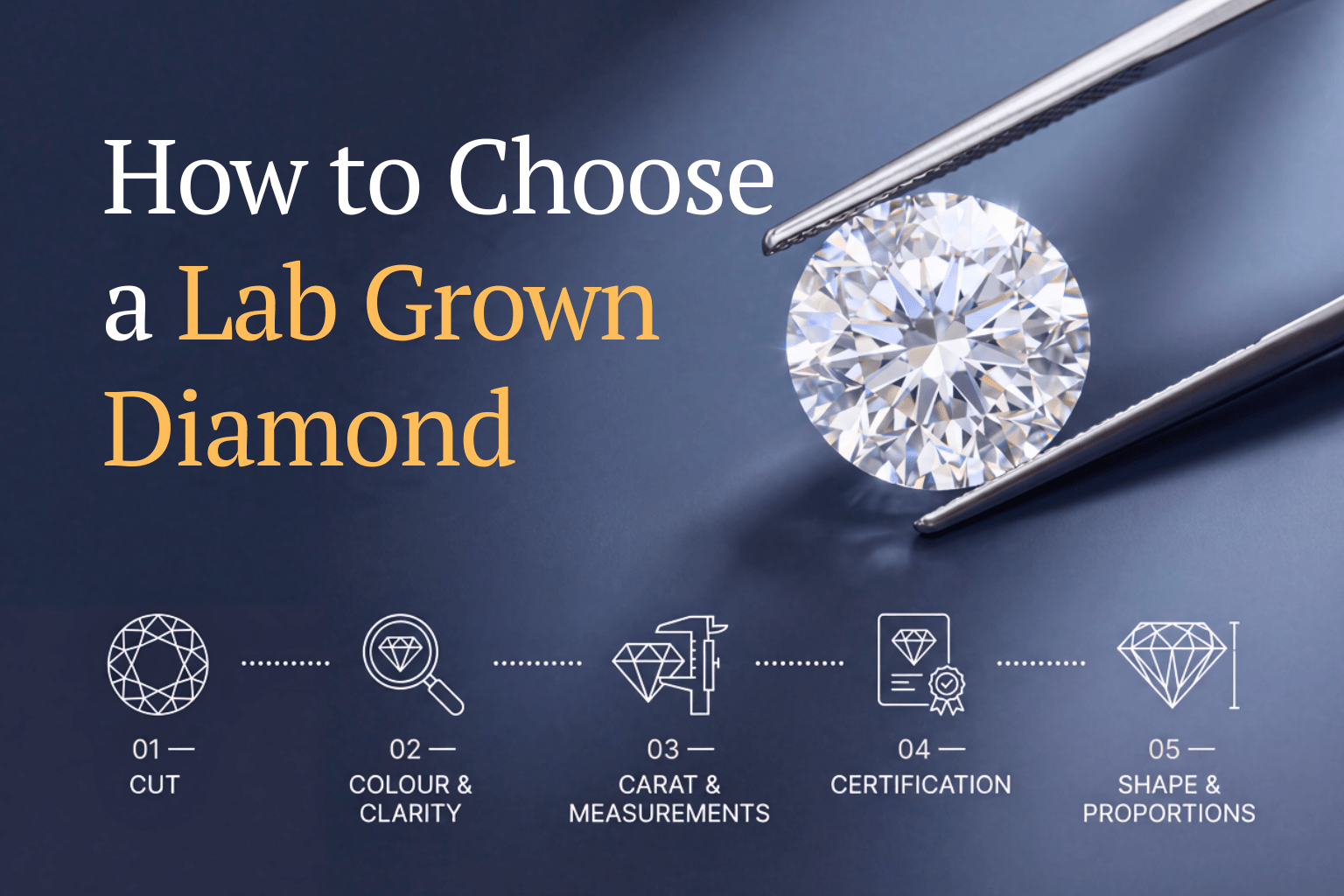
How to Choose a Lab Grown Diamond: A UK Buyer’s Guide
Choosing a lab-grown diamond is about more than finding the right carat weight or an attractive price. A well-chosen stone should balance cut, colour, clarity, proportions, certification and overall visual performance, while also giving you confidence in where and how it has been sourced.
For buyers in the UK, those details matter even more when comparing certified stones across different suppliers. Understanding how to choose a lab grown diamond means knowing which quality factors genuinely influence appearance, value and consistency, rather than relying on a grading report alone.
In this guide, we’ll break down what to look for when buying lab-grown diamonds, how certification supports your decision and which details deserve the closest attention before you buy.
Start With the 4Cs of Lab Grown Diamond Quality
The 4Cs remain the clearest starting point for assessing lab-grown diamond quality, but they work best when considered together rather than as four isolated grades. Two diamonds can look similar on paper yet perform very differently when viewed in person.
Cut
Cut has the greatest influence on how a diamond handles light. Well-balanced proportions allow light to return through the stone with greater brightness, fire and movement. But cut should not be judged by sparkle alone. Proportions, symmetry and polish also matter, especially when comparing stones that need to look consistent alongside one another.
Colour
Colour grades describe how much noticeable colour is present in a diamond. Higher grades appear more colourless, but that does not automatically mean they are the right choice for every purchase. The setting, diamond shape and budget can all influence which grade offers the best balance between appearance and price.
Clarity
Clarity refers to the inclusions or surface characteristics within a diamond. In practical buying terms, the goal is not always the highest possible grade. What matters is whether inclusions are visible, where they are positioned and whether they affect the stone’s appearance or durability.
Carat
Carat measures weight, not how large a diamond appears face-up. Two diamonds of the same carat weight can have noticeably different dimensions depending on their proportions. That is why millimetre measurements should always be considered alongside carat weight when comparing stones.
Check Lab Grown Diamond Certification
A grading report adds an important layer of confidence when assessing a stone, especially when several diamonds appear similar at first glance. Reliable lab-grown diamond certification gives buyers an independent record of key characteristics such as carat weight, colour, clarity, measurements and other identifying details.
Reports from recognised laboratories such as IGI and GIA are commonly used for lab-grown diamonds and help make comparisons more transparent. However, the report should never be treated as a substitute for checking the diamond itself. Buyers should confirm that the report number, measurements and identifying details correspond with the actual stone being offered.
This becomes particularly important when comparing multiple certified diamonds across different suppliers. A grading report can tell you how a diamond has been assessed, but it does not replace visual inspection, proportion checks or an understanding of how the stone performs in real conditions.
For that reason, avoid making a decision based only on a seller’s description or headline grade. Certification should support the purchase, not act as the only measure of quality.
Compare More Than Just the Price
Price matters, but it should never be the only comparison point. Two diamonds with the same carat weight can differ significantly in cut quality, colour, clarity, measurements and certification, which means their overall value can be very different even when the headline specifications look similar.
When comparing stones, always compare them like for like. Check the grading report, face-up dimensions, proportions and whether the quality characteristics actually suit the intended setting or design. A slightly lower-priced diamond may offer excellent value, but an unusually low price deserves a closer look rather than an immediate decision.
For buyers, the goal is not simply to find the cheapest stone. It is to understand why one diamond is priced differently from another and whether that difference is justified by its quality, certification and visual performance.
A more considered comparison leads to better buying decisions and helps avoid compromising on details that may become much more noticeable once the diamond is set.
Look at Measurements and Proportions
Carat weight tells you how much a diamond weighs, but not necessarily how large it will appear from the top. That is why measurements and proportions deserve just as much attention.
-
Check face-up dimensions: For round diamonds, diameter is a useful indicator of visible size. For fancy shapes, compare length, width and overall outline.
- Review depth and table proportions: These figures can help explain why two diamonds with the same carat weight may look noticeably different side by side.
- Watch where the weight is carried: A diamond with greater depth may hold more of its weight below the surface, making it appear smaller from the top.
- Compare stones beyond carat alone: Better-balanced proportions can create a broader, more refined face-up appearance.
- Consider the jewellery setting: Accurate measurements help ensure the diamond fits the intended design properly.
-
Prioritise consistency when matching: Dimensions become especially important for earrings, side stones, layouts and other coordinated jewellery pieces.
Consider the Diamond Shape and Intended Use
Shape changes far more than the outline of a diamond. It influences how large the stone appears, how it reflects light, how easily it can be matched with another stone and how well it suits a particular jewellery design.
Round diamonds remain a popular choice because of their balanced proportions and consistent visual performance, while fancy shapes such as oval, pear, emerald, radiant or marquise can create a more distinctive look and often appear larger for their carat weight.
The intended use should guide the decision. A centre stone for a solitaire ring has different requirements from diamonds being selected for earrings, side stones or a multi-stone layout. When buying pairs or matched layouts, dimensions, shape consistency, colour and overall appearance need to work together rather than simply sharing the same carat weight.
Availability can also vary between shapes and specifications, so it is worth considering both the design requirement and how easily a matching or replacement stone can be sourced later.
What UK Buyers Should Check Before Ordering
For UK buyers, choosing the right diamond is only part of the decision. It is equally important to understand how the buying process will work from enquiry through to delivery. Check whether the stone is physically available in the UK or needs to be sourced after the order is placed, as this can affect dispatch times, replacement options and how quickly a requirement can be fulfilled. Buyers should also confirm delivery expectations, inspection options and return terms before placing an order.
Supplier communication matters just as much as product availability. You should be able to confirm current stock, grading details, exact measurements and any specific requirements before committing. For jewellers, retailers and trade buyers purchasing regularly, access to up-to-date inventory and the ability to discuss bulk or repeat requirements can make sourcing far more efficient. A reliable supplier should make the process feel clear, responsive and straightforward from the very beginning.
Questions to Ask Before Buying a Lab Grown Diamond
Before placing an order, a few direct questions can save time and help you compare stones with far more confidence.
-
Is the diamond certified?
Confirm whether the stone comes with an independent grading report. -
Which laboratory issued the report?
Look for recognised laboratories such as IGI or GIA. -
What are the exact measurements?
Check diameter or length, width and depth rather than relying on carat weight alone. -
Is the stone currently in stock?
This helps you understand realistic availability and delivery timing. -
Can I review the grading report before buying?
Buyers should be able to check the reported specifications in advance. -
What are the delivery and return terms?
Clarify dispatch expectations, inspection options and any return conditions before confirming the purchase.
These questions may seem simple, but they quickly reveal how transparent, prepared and reliable a supplier is.
Choosing the Right Lab Grown Diamond
Learning how to choose a lab grown diamond comes down to looking beyond price alone. Certification, proportions, measurements, visual performance and supplier reliability all play a part in deciding whether a stone is truly right for your requirements.
A lower price can be appealing, but confidence comes from knowing exactly what you are buying, how the diamond has been graded and whether the supplier can support you with clear information before and after the purchase.
For UK buyers looking for certified stones, current availability and straightforward trade support, Lab Diamonds UK offers access to lab-grown diamond inventory with the details needed to compare and buy with greater confidence.
Explore our current lab-grown diamond inventory or get in touch with our team to discuss the right stone for your requirements.
FAQs
1. What should I look for when choosing a lab grown diamond?
Start with the complete picture rather than one specification. Cut quality, colour, clarity, carat weight, certification, measurements and proportions should all be considered together. Price matters, but it should be weighed against how well the diamond performs visually and whether its specifications suit the intended jewellery piece.
2. Is lab grown diamond certification important?
Yes. Lab grown diamond certification provides an independent assessment of the stone’s characteristics and gives buyers a more reliable basis for comparison. Reports from recognised laboratories such as IGI or GIA typically include details such as carat weight, colour, clarity, cut and measurements.
3. Are IGI certified lab grown diamonds reliable?
IGI certified lab grown diamonds are widely available in the market and are commonly used by buyers and suppliers. IGI grading reports provide important information about the stone’s quality characteristics, helping buyers verify key details before making a purchase.
4. Why can two lab grown diamonds with the same carat look different?
Carat measures weight, not face-up size. Two diamonds with the same carat weight can have different depth, proportions, dimensions or shape, which can make one appear larger, narrower or more balanced than the other when viewed from the top.
5. What should UK buyers check before ordering a lab grown diamond?
Before ordering, confirm that the stone is actually in stock, review the grading report, check the exact measurements and understand the expected delivery timeline. It is also worth clarifying any inspection or return terms so there are no surprises after the diamond arrives.