Blog
Back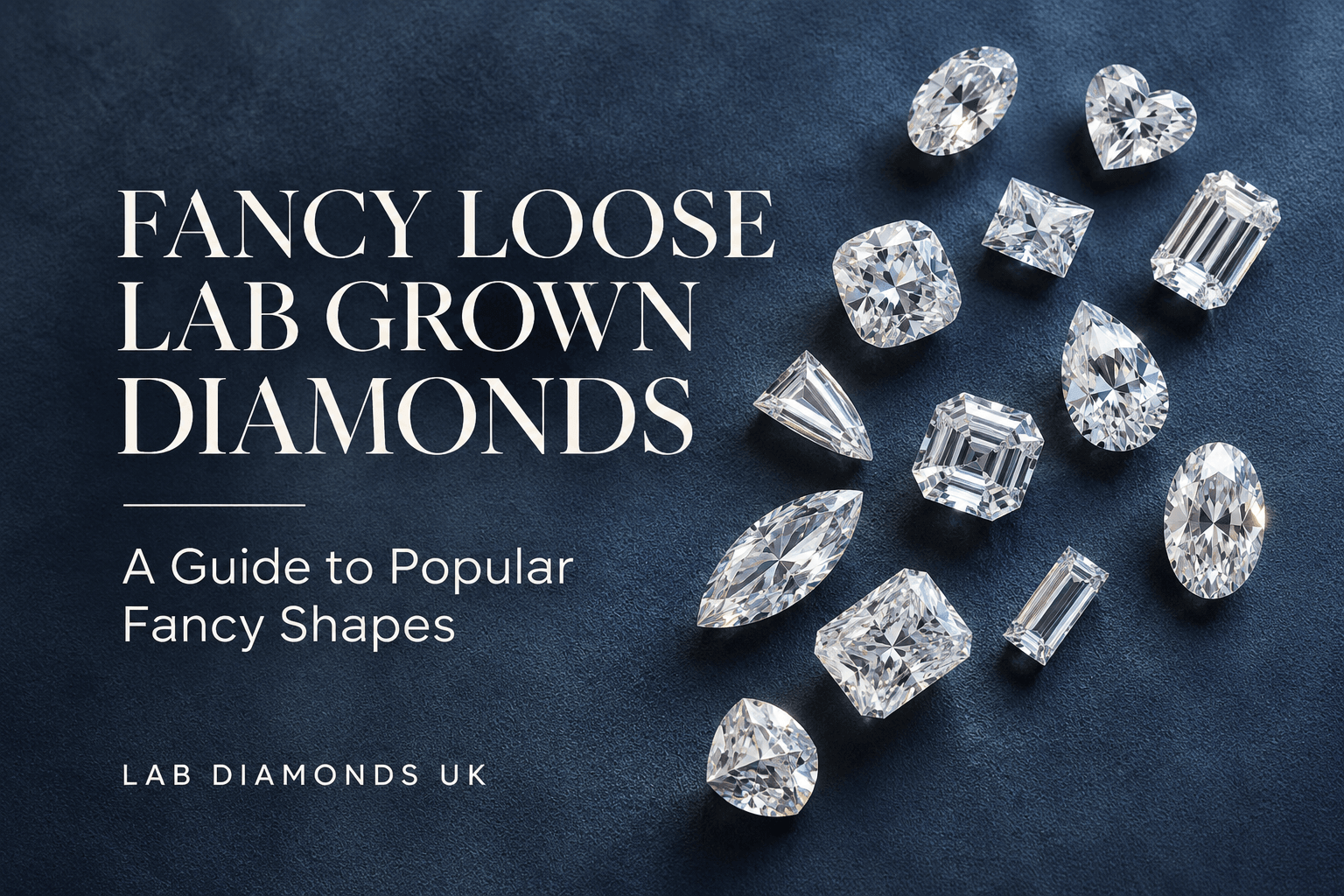
Fancy Loose Lab Grown Diamonds: A Guide to Popular Fancy Shapes
Loose lab grown diamonds are not limited to the traditional round brilliant. Different shapes can change the proportion, silhouette and overall personality of a jewellery design, giving jewellers and designers more freedom to build a piece around the stone itself. Fancy loose lab grown diamonds are cut into distinctive shapes beyond the standard round brilliant, creating more flexibility across bespoke, statement and design-led jewellery.
This guide looks at what makes a diamond shape “fancy”, the most commonly considered options, how different outlines affect visual appearance and what buyers should consider when selecting fancy shape lab grown diamonds for jewellery. The aim is to help buyers understand how shape influences the design before the stone is placed into its final setting.
What Are Fancy Loose Lab Grown Diamonds?
Fancy loose lab grown diamonds are laboratory-grown stones cut into shapes beyond the traditional round brilliant and supplied before being set into jewellery.
- Loose means the diamond is still unset, giving the buyer freedom to choose the final setting, metal and design.
- Fancy shape refers to outlines such as oval, pear, emerald, radiant, marquise, cushion and other non-round forms.
- Loose fancy diamonds give jewellers more flexibility to build the design around the stone rather than fit the stone into a fixed setting.
For jewellers and designers, fancy shape lab grown diamonds are especially useful for:
- bespoke jewellery
- centre-stone designs
- statement pieces
- multi-stone arrangements
- custom collections
Starting with the loose stone gives greater control over proportion, orientation and how the final piece comes together.
Why Choose a Fancy Shape for a Loose Diamond?
A fancy shape changes more than the outline of a diamond. It can influence how the stone sits, how much visual presence it creates and how naturally it works with the intended jewellery design.
- Visual character: Soft curves, sharp geometry and elongated silhouettes can create very different moods.
- Design proportions: The shape can affect how balanced, delicate or bold the finished piece feels.
- Finger coverage: Certain elongated forms can create a broader or longer face-up appearance.
- Symmetry: Balanced proportions can make the overall design feel more refined and controlled.
- Orientation: Vertical, horizontal or angled placement can change the entire look of the setting.
- Setting interaction: Some shapes suit centre-stone designs, while others work especially well with side stones or multi-stone layouts.
- Jewellery style: The final choice should support the design direction rather than simply follow what is most popular.
For that reason, fancy shapes are usually selected with the finished piece in mind, not in isolation.
Popular Fancy Shapes in Lab Grown Diamonds
Different shapes bring different proportions, outlines and visual behaviour to a jewellery design. The right choice depends on how the stone is intended to sit, how much presence it should create and the overall style of the finished piece.
Oval
Oval diamonds have an elongated outline with soft curves, giving them a refined and versatile look. They work especially well as centre stones and can create a longer visual profile without feeling overly geometric.
Pear
Pear shapes combine a rounded end with a tapered point, creating a distinctive teardrop silhouette. Their orientation matters, which makes them particularly useful for bespoke and statement-led designs where direction becomes part of the composition.
Emerald
Emerald cuts are known for their clean, rectangular geometry and step-cut appearance. Broad, open reflections give them a more structured visual character, while proportion and symmetry play an important role in how balanced the stone appears.
Marquise
Marquise diamonds have a long profile with pointed ends, creating strong visual presence. Their shape can be used vertically, horizontally or at an angle, giving designers more freedom with orientation.
Cushion
Cushion shapes sit between square and rectangular forms, softened by rounded corners. Their adaptable outline can work across both classic and more contemporary jewellery styles.
Radiant
Radiant cuts combine a square or rectangular outline with a lively faceted appearance. They offer a useful balance between a structured silhouette and stronger internal reflections.
Asscher and Heart
Asscher shapes bring an architectural square form with a step-cut character, while heart shapes offer a more expressive, symbolic outline suited to distinctive centre-stone designs.
Beyond these familiar options, specialist requirements may call for baguettes, half moons, shields, kites, trapezoids and other less conventional cuts within the wider Lab Diamonds UK fancy loose range.
How Different Fancy Shapes Change the Look of a Diamond
Shape can dramatically change how large, long, soft or structured a diamond appears once it is set. Even when two stones have a similar carat weight, their proportions and outlines can create very different visual impressions.
|
Shape Style |
Examples |
Visual Effect |
|
Elongated shapes |
Oval, Pear, Marquise |
Create a longer visual profile and can make the stone feel more prominent across the finger or within a pendant. |
|
Geometric shapes |
Emerald, Asscher |
Bring cleaner lines and a more architectural appearance, especially in designs built around symmetry and structure. |
|
Softer shapes |
Cushion |
Rounded corners and a gentler outline create a softer, less angular appearance. |
|
Structured statement shapes |
Radiant and other angular cuts |
Combine a defined outline with a stronger contemporary feel and more energetic visual presence. |
The main takeaway is simple: carat weight alone does not determine visual presence. Shape, proportion and outline can change how a diamond is perceived in the finished jewellery.
How to Choose the Right Fancy Shape for a Jewellery Design
Choosing the right shape starts with understanding how the stone needs to work within the finished piece. The best option is usually the one that fits the design proportions naturally.
Start With the Design
Think first about where the diamond will be used. An engagement ring, pendant, pair of earrings, bespoke statement piece or multi-stone design may each suit a different outline and level of visual presence.
Consider the Overall Proportion
Look at the length-to-width appearance of the stone, the size of the setting, surrounding diamonds and the available space within the design. These factors can change how balanced the finished piece feels.
Think About Orientation
Some fancy shapes can be positioned vertically, horizontally or diagonally. Pear, marquise and other elongated forms can look very different depending on how they are placed.
Consider Whether You Need a Single Stone or Matching Stones
A single centre stone gives more freedom to focus on one shape and proportion. For earrings, side stones or multi-stone designs, closer matching in size, outline and overall appearance becomes more important.
What Should Jewellers Consider When Sourcing Fancy Loose Diamonds?
For trade buyers, sourcing fancy shapes is often less about choosing a popular cut and more about finding a stone that fits the design requirement accurately.
Key points to consider include:
- the exact shape and outline needed
- dimensions and overall proportion
- colour and clarity requirements
- whether matching stones are needed
- certification where required
- current availability
- whether similar specifications can be sourced again for repeat orders
Dimensions and consistency can be particularly important when a stone needs to fit a specific setting or when the same look must be maintained across multiple pieces.
For jewellers, designers and retailers, having access to a wider range of shapes can make bespoke work and repeat sourcing easier to manage.
For current options, explore fancy loose lab grown diamonds available for trade requirements.
Why Loose Fancy Shapes Can Be Useful for Bespoke Jewellery
Loose fancy shapes give jewellers more freedom to let the stone influence the design rather than working around a fixed setting.
They can be especially useful when a bespoke piece needs:
- A stone-led design: Build the setting around the outline, proportions and orientation of the diamond.
- More flexibility with proportion: Explore longer, wider or more geometric silhouettes before finalising the piece.
- A less conventional centre stone: Move beyond standard round designs with a shape that creates stronger visual character.
- Mixed-shape combinations: Pair different outlines to create contrast, balance or a more distinctive composition.
- A more individual finish: Use shape as part of the design language rather than treating it as a secondary detail.
For bespoke jewellery, the loose stone often becomes the starting point for the entire design direction.
Final Thoughts
There is no single fancy shape that works best for every jewellery design. The right choice depends on the proportions of the stone, the appearance you want to create, the setting and how the diamond needs to work within the finished piece.
For jewellers and trade buyers, sourcing requirements matter too, especially when a design calls for specific dimensions, matching stones or repeat availability.
The best shape is ultimately the one that supports both the creative direction and the practical needs of the jewellery.
Explore Fancy Loose Lab Grown Diamonds
FAQs
What are fancy loose lab grown diamonds?
Fancy loose lab grown diamonds are unset laboratory-grown stones cut into shapes other than the traditional round brilliant, such as oval, pear, emerald, marquise, cushion and radiant.
Which fancy diamond shapes are most popular?
Popular options include oval, pear, emerald, marquise, cushion and radiant. Asscher and heart shapes are also chosen for more distinctive or design-led jewellery.
What is the difference between a fancy shape and a round diamond?
A round diamond follows the traditional circular brilliant outline, while a fancy shape uses a different silhouette. That change in outline can affect proportion, visual presence and how the stone works within a setting.
Which fancy diamond shape is best for a jewellery design?
There is no single best option. The right shape depends on the design, setting, desired appearance, proportion and whether the stone is intended for a centrepiece, pair or multi-stone arrangement.
Can fancy-shaped lab grown diamonds be bought as loose stones?
Yes. Fancy-shaped lab grown diamonds can be sourced as loose stones, allowing jewellers and designers to select the setting and build the final piece around the diamond.