Blog
Back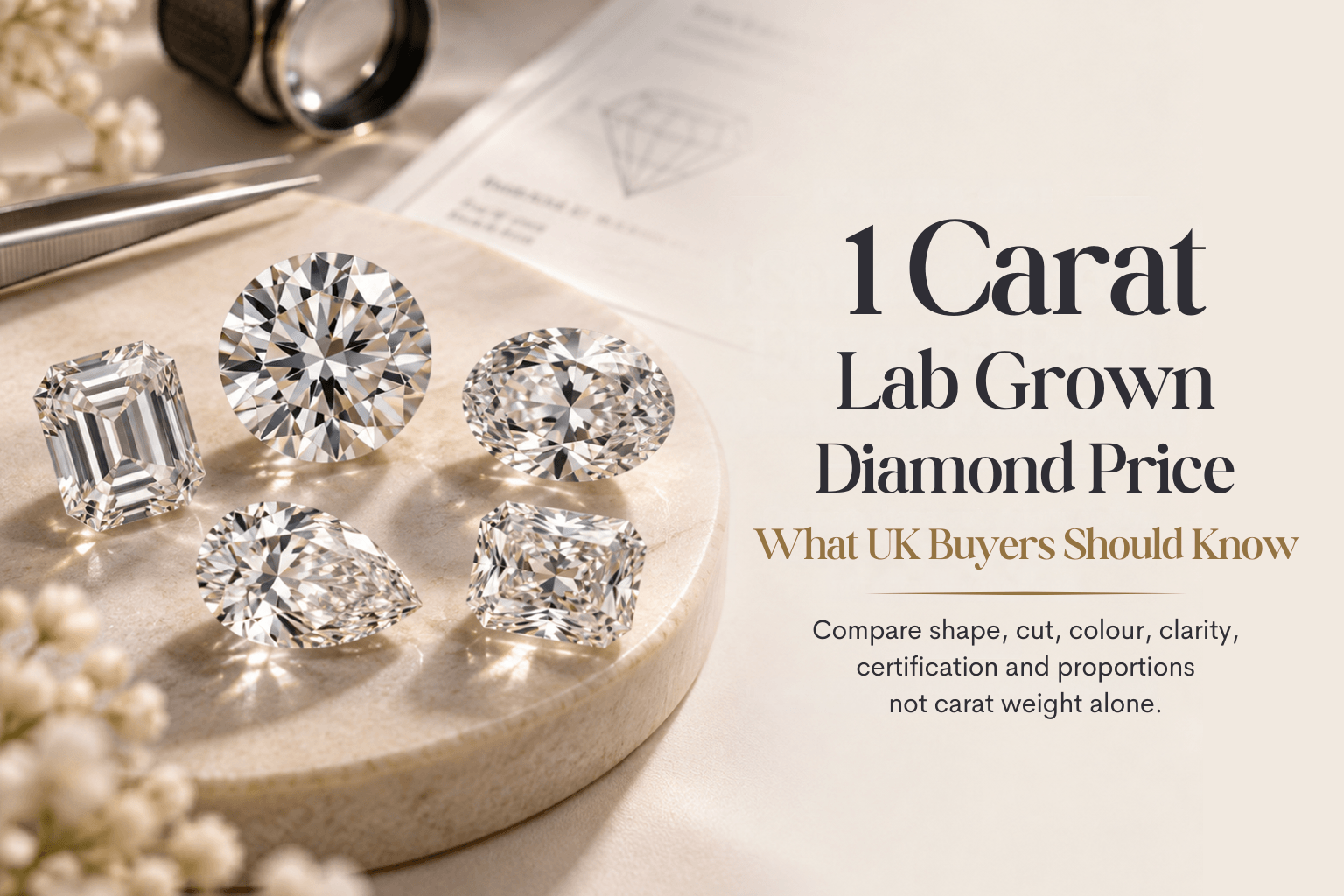
1 Carat Lab Grown Diamond Price: What UK Buyers Should Know
The 1 carat lab grown diamond price can vary more than many buyers expect. Two stones with the same carat weight may be priced differently because of cut, colour, clarity, certification, proportions and overall visual performance.
For UK buyers, that makes it important to look beyond the headline figure. A lower lab grown diamond price may appear attractive at first, but the better comparison is whether the stone offers the right balance of quality, grading and suitability for the intended piece.
In this guide, we’ll look at what influences 1 carat pricing, how UK buyers can compare stones more confidently and which details deserve the most attention before making a purchase.
Why 1 Carat Lab Grown Diamond Prices Can Vary
The price of a 1 carat lab grown diamond depends on more than carat weight alone. Several factors can influence the final figure:
- Diamond Shape
Round and fancy shapes can follow different pricing patterns depending on demand, cutting yield and availability. - Measurements & Proportions
Two 1-carat diamonds can look noticeably different face-up, even when they share the same carat weight. - Certification & Grading Combination
Certification, colour, clarity and the overall grading profile can influence price, especially when comparing similar stones. - Stock Availability
Certain combinations of shape, size, colour and clarity may be more limited in current inventory, which can affect pricing. - Retail vs Trade Pricing
The final price can vary depending on whether the stone is being purchased through a retail or trade channel. - Supplier Pricing Structure
Margins, sourcing models and access to inventory can create differences between suppliers. - Market Conditions
Lab-grown diamond pricing can change over time as supply, demand and wider market conditions shift.
How Much Does a 1 Carat Lab Grown Diamond Cost in the UK?
There is no single fixed 1 carat lab grown diamond price in the UK, because the final figure depends on the stone’s shape, grading combination, proportions, certification and the way it is being purchased. The current Lab Diamonds UK price list shows this clearly: a 1 carat HPHT round diamond in the listed EF/VS, VG make category is priced at US$94 per carat, while 1 carat fancy shapes are listed at different rates depending on the cut and specification. For example, the current list shows around US$100–US$125 per carat for several 1 carat fancy shapes, with some specialised cuts priced higher.
Certification can also affect the final cost, as a certified stone comes with independent grading details that make comparison more transparent. Shape, dimensions and grading combinations can further change the price, even when two diamonds share the same carat weight.
Buyers should also distinguish between retail and trade pricing. Lab Diamonds UK’s published list is trade-focused, quotes prices in US dollars and notes that prices are subject to change, so the best comparison is always based on the current stone specification and available stock rather than a single headline figure.
Why Two 1 Carat Lab Grown Diamonds Can Have Different Prices
A 1 carat label only tells you the diamond’s weight. Two stones with the same carat weight can still differ in quality, appearance and price because several specifications influence the final value.
|
Factor |
Why It Affects Price |
|
Cut & Proportions |
Better-balanced proportions can improve light performance and overall visual appeal. |
|
Colour |
Different colour grades can change both appearance and pricing, even at the same carat weight. |
|
Clarity |
Inclusion type, visibility and grading level can influence the final price of the stone. |
|
Certification |
Independently graded diamonds provide clearer, more reliable specification details for comparison. |
|
Shape |
Round, oval, emerald, pear and other fancy shapes can follow different pricing patterns. |
|
Measurements |
Two 1 carat stones can have different face-up dimensions depending on how their weight is distributed. |
Does Diamond Shape Affect the Price?
Yes. Diamond shape can influence price because each cut has different cutting requirements, demand levels and stock availability. Round diamonds often follow a different pricing structure from fancy shapes because of how the rough is cut and the consistency buyers expect from the finished stone.
Fancy shapes such as oval, emerald, pear and radiant can also vary in price even at the same carat weight. Their value may be influenced by proportions, length-to-width ratio, measurements and how readily a particular specification is available.
Other fancy shapes, including marquise, cushion, heart and asscher, can follow their own pricing patterns as well. In Lab Diamonds UK’s current fancy-cut price list, 1 carat stones are listed at different per-carat rates depending on shape and specification, which shows why shape should always be considered when comparing like-for-like options.
1 Carat vs 2 Carat Lab Grown Diamond Pricing
Moving from 1 carat to 2 carats does not mean the price simply doubles. The 2 carat lab grown diamond price is influenced by availability, shape, cutting requirements and the exact grading combination.
|
Comparison |
1 Carat Lab Grown Diamond |
2 Carat Lab Grown Diamond |
|
Carat Weight |
Lower overall stone weight |
Double the weight, but not necessarily double the price |
|
Availability |
Generally available across a wider range of specifications |
Certain shapes and grading combinations may be less readily available |
|
Price Structure |
Pricing varies by shape, quality and specification |
Per-carat pricing can change rather than following a fixed multiplier |
|
Quality Factors |
Colour, clarity, proportions and certification affect price |
The same factors apply and can create larger price differences |
|
Shape & Dimensions |
Different cuts can follow different price points |
Larger dimensions and cutting requirements can further influence pricing |
|
Sourcing |
Often easier to compare across available stock |
Specific 2-carat requirements may take more careful sourcing |
Lab Diamonds UK’s current price list also shows that pricing changes across carat bands and shapes rather than increasing in a perfectly linear way.
What UK Buyers Should Compare Before Choosing a Diamond
Before choosing a stone, UK buyers should compare the full specification rather than relying on carat weight or price alone. Start with the grading report and confirm the exact measurements, as these details help show how the diamond has been assessed and how it may appear once set.
Cut, colour and clarity should then be considered together, not as isolated grades. A technically strong stone still needs to suit the intended jewellery application, whether it is being selected for a solitaire, matched pair, side stones or a multi-stone design.
Availability matters too. A diamond that fits the specification but is difficult to replace or match later may not always be the most practical choice for ongoing requirements.
Supplier reliability is equally important. Buyers should be able to confirm stock, certification details, measurements and delivery expectations before committing. For a deeper breakdown of these checks, see our guide on how to choose a lab grown diamond.
Should You Choose Based on Price Alone?
No. A lower price can be attractive, but it does not automatically mean better value. If the proportions are poor, the grading information is unclear, certification is missing or the stone is not well suited to the intended setting, a cheaper option can become a compromise rather than a saving.
The better approach is to compare the full specification alongside the price. Look at how the diamond is graded, whether the measurements work for the design and whether the stone has the right balance of cut, colour and clarity for its intended use.
Price should help guide the decision, but it should not replace proper comparison. The strongest value usually comes from a stone that is well documented, suitable for the setting and fairly priced for its specification.
Final Thoughts
Understanding lab grown diamond price means looking beyond the number itself. The better comparison is between stones with similar specifications, clear certification and measurements that suit the intended jewellery piece.
Before buying, review the grading report, compare the full specification and consider how the diamond will actually be used. For UK buyers, current stock availability also matters, especially when sourcing specific shapes, sizes or repeat requirements.
For More Details Contact Lab Grown Diamond
1. What is the average 1 carat lab grown diamond price in the UK?
There is no single fixed 1 carat lab grown diamond price in the UK. The final cost depends on shape, colour, clarity, certification, measurements, availability and whether the stone is being purchased through retail or trade channels. Current stock and market conditions can also affect pricing.
2. Why can two 1 carat lab grown diamonds have different prices?
Two stones with the same carat weight can vary in price because carat does not reflect overall quality. Differences in cut, proportions, colour, clarity, certification, shape and face-up measurements can all influence the final lab grown diamond price.
3. Is a 2 carat lab grown diamond twice the price of a 1 carat diamond?
Not necessarily. The 2 carat lab grown diamond price does not increase in a perfectly linear way. Larger stones may have different availability, cutting requirements and grading combinations, so the price per carat can change depending on the exact specification.
4. Does certification affect lab grown diamond cost?
Yes. Certification can influence lab grown diamond cost because a recognised grading report provides an independent assessment of key characteristics such as carat, colour, clarity and measurements. Certified stones are generally easier to compare on a like-for-like basis.
5. What should I check before comparing lab grown diamonds price in the UK?
Compare the full specification, not just the headline figure. Check the grading report, exact measurements, shape, cut, colour, clarity, stock availability and whether the stone suits the intended setting. This gives a much clearer picture of value when comparing lab grown diamonds price in the UK.